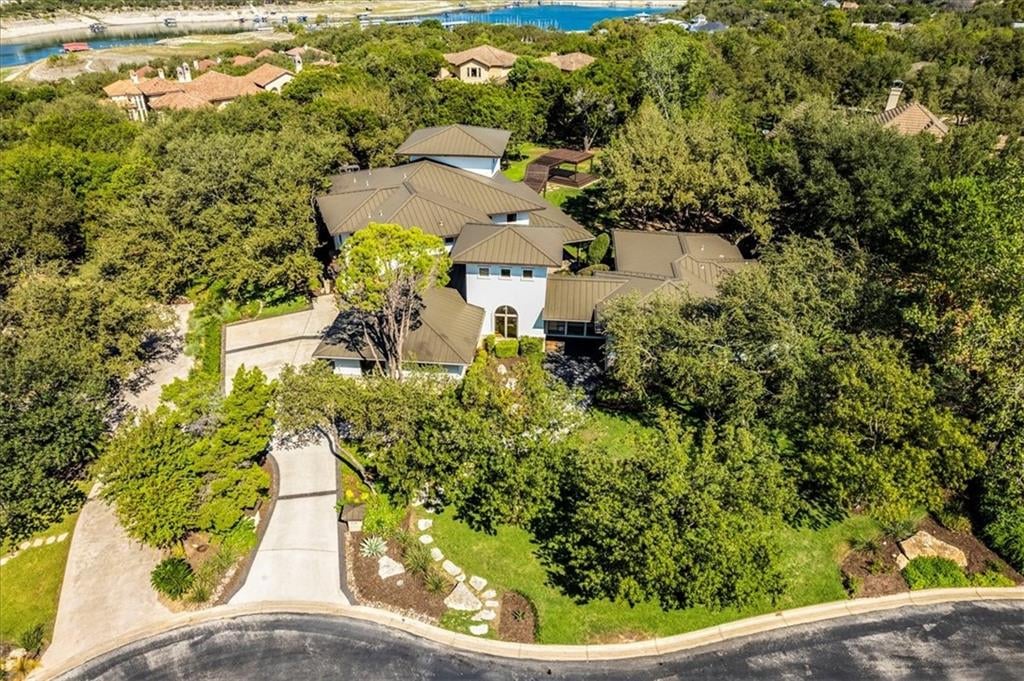
How to Price Austin Property for Maximum Seller Value
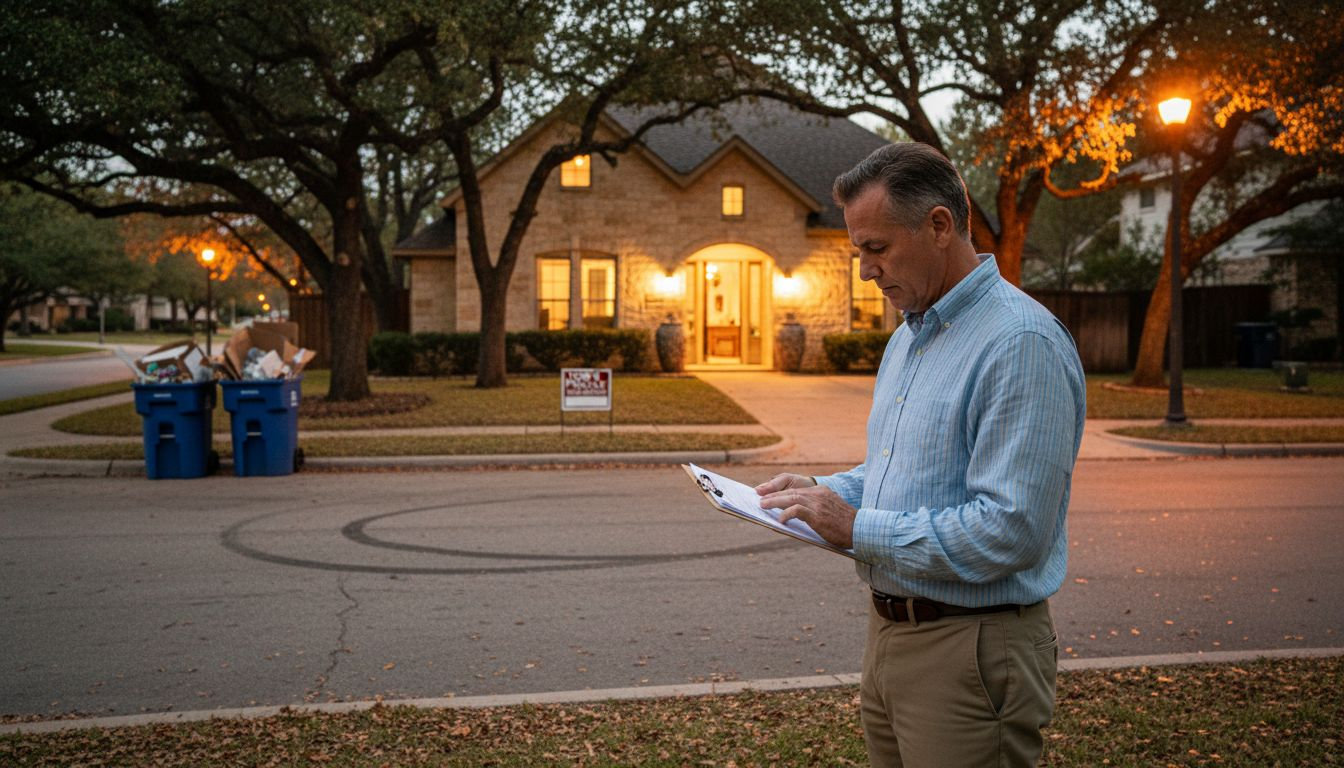
Finding the right asking price for a luxury home in Austin can feel like a high-stakes decision with significant financial implications. Austin’s real estate market is shaped by constantly shifting buyer activity, inventory levels, and neighborhood trends, making traditional pricing guesswork risky for affluent sellers and discerning investors. This guide breaks down data-backed methods to help you confidently price or purchase elite properties in Austin’s most sought-after neighborhoods.
Table of Contents
- Step 1: Research Local Austin Market Trends
- Step 2: Assess Comparable Luxury Home Sales
- Step 3: Evaluate Unique Property Features
- Step 4: Apply Data-Driven Pricing Strategies
- Step 5: Validate Pricing With Expert Feedback
Quick Summary
| Key Insight | Explanation |
|---|---|
| 1. Research Current Market Trends | Gather real-time sales data, inventory levels, and neighborhood dynamics to set competitive pricing. |
| 2. Analyze Comparable Sales | Focus on closed sales, not active listings, to find realistic pricing based on similar properties. |
| 3. Evaluate Unique Property Features | Identify and quantify distinct characteristics that differentiate your home, adjusting pricing accordingly. |
| 4. Utilize Data-Driven Pricing Strategies | Create multiple pricing scenarios based on market factors and comparable sales to maximize value. |
| 5. Seek Expert Validation | Get a professional CMA or BPO to confirm your pricing strategy, ensuring it aligns with market conditions. |
Step 1: Research Local Austin Market Trends
Understanding what’s happening in the Austin market right now is foundational to pricing your property for maximum value. This step involves gathering current data on sales activity, inventory levels, price movements, and neighborhood dynamics. You’re not just looking for yesterday’s numbers; you need the real-time pulse of where buyers are active, what they’re paying, and how competition affects your property’s positioning.
Start by accessing Texas Real Estate Research Center housing market data, which tracks home sales, listings, prices, and inventory across Austin’s neighborhoods. This database aggregates information from over 50 Texas MLS systems, giving you a comprehensive view of single-family homes, condominiums, and townhouses across both new and existing construction. Spend time reviewing the historical data to identify patterns. Are prices climbing in your neighborhood? How long are homes staying on the market? What’s the current inventory level compared to last year? These questions matter because they directly inform whether you should price aggressively or conservatively.
Next, examine Cushman & Wakefield’s quarterly MarketBeat reports for Austin, which provide detailed supply and demand analysis at both market and submarket levels. While these reports emphasize commercial property, they reveal critical economic indicators affecting the overall Austin real estate ecosystem. Vacancy rates, leasing activity, and new construction pipelines all signal whether the broader market is expanding or contracting, which influences residential values. Pay particular attention to neighborhoods where commercial activity is booming, as these areas often see residential appreciation as job centers attract workers and investment capital.
Don’t overlook neighborhood-specific research. Austin’s market isn’t monolithic. Tarrytown moves differently than Westlake, which operates on different dynamics than East Austin. Look at comparable sales in your specific area over the past 90 days. What price per square foot are similar properties commanding? How quickly are they selling? Are there multiple offers, or are homes lingering? This level of specificity beats broad market statistics every time when it comes to pricing decisions.
You should also track how Federal interest rates affect luxury property values, since financing costs directly influence buyer purchasing power and demand. When rates tick up, the pool of qualified buyers shrinks, often compressing prices. When rates drop, buying power increases and competition intensifies. Understanding where we are in the interest rate cycle helps you time your listing for maximum exposure to motivated buyers.
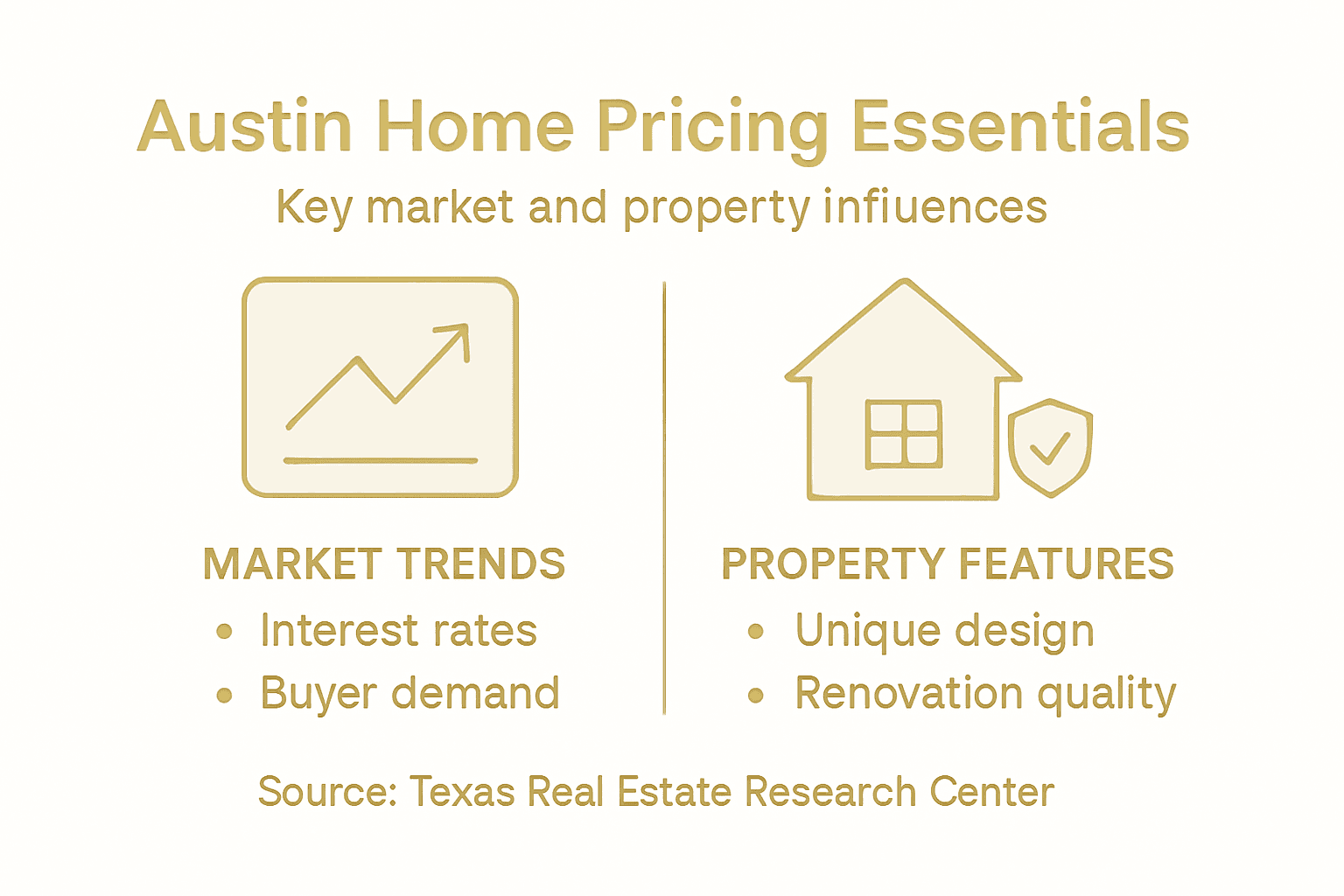
Here’s a summary of key factors influencing Austin luxury home prices:
| Factor | Market Impact | Typical Effect on Pricing |
|---|---|---|
| Neighborhood Trends | Local buyer preferences | Can increase or decrease value |
| Inventory Levels | Supply vs. demand balance | Affects selling speed and price |
| Interest Rate Shifts | Buyer affordability changes | Expands or shrinks buyer pool |
| Recent Comparable Sales | True market price benchmarks | Sets realistic pricing boundaries |
Pro tip: Set up monthly alerts from the Texas Real Estate Research Center and bookmark these reports in a folder so you’re always comparing apples to apples when new data drops, ensuring your pricing strategy stays current with real market movement rather than outdated benchmarks.
Step 2: Assess Comparable Luxury Home Sales
Comparable sales analysis is where pricing strategy transforms from general market knowledge into specific, defensible numbers. You need to identify properties that genuinely compete with yours in the Austin luxury market, then understand what buyers actually paid for them. This step separates sellers who price strategically from those who guess and hope for the best.
Start by pulling recent sales data for properties similar to yours in size, condition, and location. Austin’s luxury market operates differently across neighborhoods. A 5,000 square foot contemporary in Westlake commands different pricing than an equivalent property in Tarrytown or Spanish Oaks, even though they’re minutes apart. Look at closed sales from the past 60 to 90 days, not active listings. Active listings show what sellers are asking, not what buyers are paying. There’s often a significant gap between asking price and actual sale price, especially in competitive markets. You want the truth of closed transactions, not aspirational listings that have been sitting for months.
When evaluating comparables, focus on luxury home pricing factors including location, size, and supply-demand dynamics. Don’t just match square footage. Consider quality of construction, architectural significance, view characteristics, outdoor living spaces, smart home systems, and finishes. A 4,500 square foot home with dated kitchens and original bathrooms is not a true comparable to a 4,500 square foot home that underwent a high-end renovation two years ago. These details matter enormously in luxury pricing. Look for properties that closed within the last three months in your neighborhood specifically. The farther you stretch geographically or temporally, the less relevant your comparable becomes.

Build a spreadsheet of at least five comparable sales. Document the sale price, price per square foot, days on market, listing price versus sale price, and key features. Then look for patterns. If every comparable sold for 15 percent below asking price, that tells you something. If properties are selling within a week of listing, that’s different market psychology than properties lingering for 60 days. Note whether homes sold with multiple offers or if they needed price reductions. This data reveals whether you have a seller’s market with strong buyer demand or a balanced market requiring strategic positioning.
Don’t ignore the outliers. If one property sold significantly higher or lower, investigate why. Was there a major renovation? A problem with the property? New amenities? Understanding the story behind each sale prevents you from drawing wrong conclusions. You should also note that home preparation directly impacts perceived value, so comparables that were professionally staged and presented command premiums over properties that sold as-is.
Finally, consider working with your real estate advisor to access MLS data more comprehensively. MLS systems provide transaction details that public records sometimes miss, including actual days on market, inspection issues, and seller concessions. This intelligence helps you price not just competitively but strategically within your specific market segment.
Pro tip: Create separate comparable groupings for properties that sold well below asking and those that hit asking or above, then analyze what distinguished the high-performers so you can position your property similarly.
Step 3: Evaluate Unique Property Features
Luxury properties in Austin rarely come off an assembly line. Your home likely has distinctive characteristics that standard comparables cannot fully capture. This step involves identifying those unique elements, quantifying their value, and ensuring your pricing reflects what makes your property genuinely different from everything else on the market.
Start by cataloging what sets your property apart. Is it an award-winning architectural design? Panoramic water views? A resort-style outdoor living space with a resort-quality pool and spa? Mature landscaping that would cost years to replicate? Custom smart home integration? Perhaps your home sits on multiple acres with rare privacy, or occupies a coveted corner lot with unobstructed views. Maybe it features a guest house, wine cellar, private gym, or home theater. These differentiators matter enormously in luxury pricing, but only if you understand how to value them. When evaluating unique properties with limited comparable sales, experts recommend quantifying specialized amenities with monetary adjustments and understanding niche market demand so your pricing attracts the specific buyer who values what you have.
For each unique feature, research replacement cost and market appetite. What would it cost a buyer to add a pool system similar to yours if they built new construction? What does the current market demand for specific amenities in your neighborhood? A state-of-the-art chef’s kitchen might add 8 to 12 percent to a property’s value in Westlake, where culinary enthusiasts concentrate, versus 4 to 6 percent in a neighborhood where buyers prioritize outdoor space. Location and buyer profile determine whether your unique features command premium pricing or simply meet baseline buyer expectations. A smart home system is table stakes in Tarrytown but genuinely differentiating in other Austin neighborhoods.
Consider applying multiple evaluation methods for custom homes including cost approach analysis alongside comparable sales adjustments. The cost approach estimates replacement value by calculating what it would cost to rebuild your home with similar quality and finishes. This method becomes valuable when your property is so distinctive that direct comparables barely exist. If your home would cost 3.2 million dollars to rebuild today but sold for 2.8 million five years ago, and the market has appreciated 18 percent since then, you have a data point suggesting your current home’s value range. Don’t rely on this alone, but use it to triangulate pricing when standard comparable analysis feels incomplete.
Document the condition and quality of every significant system. Original hardwood floors in excellent condition are different from new installation. Original windows with architectural significance are different from new efficiency windows. High-end finishes from five years ago may need updating sooner than you think, affecting value perception. Be honest about deferred maintenance. Buyers of luxury properties expect perfection, and any visible issues will be leveraged during negotiations. A $40,000 roof replacement that needs attention in three years becomes a $120,000 negotiation headache if a buyer’s inspector identifies it.
Finally, photograph and document your unique features professionally. High-quality visuals of architectural details, design elements, and premium finishes justify premium pricing in buyers’ minds. A listing presentation that explains the story behind your property’s design, the quality of materials used, and the prestige of its location creates perceived value that raw square footage cannot.
Pro tip: For truly one-of-a-kind properties, consider commissioning a professional appraisal before listing rather than relying solely on comparable sales analysis; this gives you a defensible valuation foundation when marketing to niche buyers willing to pay for rarity and exclusivity.
Step 4: Apply Data-Driven Pricing Strategies
You’ve gathered market data, analyzed comparables, and evaluated your property’s unique features. Now it’s time to synthesize all of that information into a pricing strategy backed by data rather than intuition. This step transforms raw information into actionable pricing decisions that maximize your property’s value while attracting qualified buyers in the current market environment.
Start by building a comprehensive pricing model that weighs all factors you’ve identified. Your comparable sales analysis provides the foundation. Your unique feature evaluation adds adjustments. Your market trend research supplies context about whether momentum favors sellers or requires strategic positioning. Modern real estate pricing increasingly relies on predictive analytics and AI-driven methods that analyze market trends and buyer behavior to optimize sale timing and maximize returns. These approaches examine not just historical comparable sales but also current market velocity, buyer demand patterns, and economic indicators to forecast price elasticity. You don’t need an advanced algorithm to apply this thinking. You simply need to organize your data intelligently and recognize that pricing isn’t static. It’s a strategic decision point informed by multiple data streams.
Create a pricing scenario analysis with three potential price points. Set a premium price that reflects your property’s best features and strongest market positioning. This is your aspirational ask, positioned slightly above where you expect the market will bear, testing buyer appetite. Set a core price that represents your confident valuation based on comparables and market conditions. This is the price you genuinely expect to achieve. Set a strategic minimum price that represents your walk-away point, the lowest you’re willing to accept given your circumstances and market conditions. Understanding these three scenarios helps you avoid emotional decision-making when offers arrive. You’ll know in advance where your flexibility exists and where it doesn’t.
Consider that machine learning and advanced algorithms now integrate multiple property characteristics with macroeconomic factors to produce highly accurate price forecasts reflecting current demand dynamics. While sophisticated models aren’t accessible to every seller, understanding this principle matters. Your pricing should account for both property-specific factors and broader economic conditions. Is the Federal Reserve signaling rate increases? Are migration patterns favoring Austin? Are local tech sector job announcements accelerating or slowing? These external factors influence buyer confidence and purchasing power, affecting what your home will ultimately command.
Timing your pricing is equally important as the price itself. If you’re entering the market in spring with strong buyer activity, you might price near your premium scenario, letting competitive pressure drive final value. If you’re listing in a slower season, pricing closer to your core scenario with strong marketing becomes critical to generate showings. Dynamic pricing strategies account for these seasonal factors, adjusting price periodically to maintain buyer interest if your home hasn’t sold within your expected timeframe. This isn’t desperation pricing. It’s strategic recalibration based on real market feedback. A price reduction of 2 to 3 percent after 30 days with minimal showings signals to the market that you’re responsive to conditions, often attracting fresh buyer attention.
Document your pricing rationale clearly. When you can explain to potential buyers why your home commands its specific price point, you’ve shifted the conversation from “Is this expensive?” to “What am I getting for this investment?” You’re telling a data-backed story about market conditions, comparable values, and your property’s genuine distinction. This narrative approach, grounded in real analysis rather than wishful thinking, builds credibility with sophisticated luxury buyers who understand market fundamentals.
Pro tip: Review your pricing strategy monthly against new comparable sales data and market activity; properties that don’t sell typically suffer from pricing more than any other factor, so staying responsive to market feedback demonstrates sophistication and increases your likelihood of achieving your target value.
Step 5: Validate Pricing with Expert Feedback
You’ve done the analytical work. You’ve assembled data, built scenarios, and crafted a pricing strategy. But before you commit to a listing price, you need validation from someone who lives in Austin’s luxury market daily. This step involves getting professional feedback from experienced real estate experts who can sense-check your analysis and identify blind spots you might have missed.
Engage a qualified real estate advisor to prepare a Comparative Market Analysis (CMA) or Broker Price Opinion (BPO). These services go beyond what you can accomplish alone. A CMA involves detailed market research, property condition assessment, and professional judgment based on years of transactional experience. In Texas, professional brokers utilize CMAs and BPOs to provide expert pricing guidance that supports accurate sale price estimation while complying with state standards. When you work with an advisor on this analysis, you’re tapping into their knowledge of current buyer psychology, market velocity in your specific neighborhood, and how buyers perceive value in the current environment. They’ve seen offers rejected for pricing reasons. They know which neighborhoods are experiencing price compression and which are appreciating. This institutional knowledge cannot be replicated through online research alone.
When reviewing a professional CMA, look beyond the recommended price. Ask detailed questions about the methodology. Which comparables did they weight most heavily and why? How did they adjust for condition, location, and amenities? What’s their assessment of current market absorption rates? Are homes selling faster or slower than they were 90 days ago? These conversations reveal whether the advisor has done genuine analysis or simply run a quick algorithm. The best advisors will challenge your assumptions respectfully. If you believe your kitchen renovation justifies a 12 percent premium but comparable sales suggest 6 to 8 percent, you need to understand that gap. The advisor might explain that kitchen renovations are now expected in your price range rather than differentiating, or they might identify factors you overlooked that genuinely justify your premium positioning.
Implement a comprehensive pricing strategy that accounts for multiple variables. Professional real estate experts continuously monitor market response, comparable sales, and inspection findings to adjust pricing strategies, integrating repair considerations and concessions to maintain competitive positioning. This approach recognizes that pricing isn’t a one-time decision but a dynamic process. Your advisor should help you establish not just your initial price but also your pricing adjustment protocol. What conditions trigger a price reduction? How long do you hold at list price before reconsidering? What market signals indicate you should stand firm versus adjust? Having these conversations before listing prevents emotional decision-making when your home doesn’t receive an offer in the first week.
Don’t confuse getting feedback with seeking validation for a price you’ve already decided on. The best advisors will sometimes recommend pricing lower than you want if market data supports that position. Accepting that feedback, even when it stings, often results in faster sales and ultimately higher net proceeds. A home priced 5 percent above market might sit for 90 days before selling at a 10 percent discount. A home priced competitively might sell in 30 days at 99 percent of asking. You need to hear the truth, not the affirmation you want.
Finally, request written documentation of the pricing recommendation and rationale. This document becomes your reference point. When you receive an offer, you can evaluate it against the advisor’s professional assessment rather than gut reaction. When negotiations get difficult, you have data supporting your positions. You’re no longer debating opinion but comparing against professional analysis.
Compare approaches for pricing unique luxury homes in Austin:
| Pricing Approach | Main Advantage | When to Use |
|---|---|---|
| Comparable Sales | Reflects current buyer trends | When similar properties exist |
| Cost Approach | Values unique features fairly | For custom or rare properties |
| Data-Driven Models | Integrates many real factors | In volatile or changing markets |
| Expert Feedback | Tactical market guidance | For validation before listing |
Pro tip: Ask your advisor for their prediction on what your home will actually sell for, separate from the list price they recommend; the difference between these two numbers reveals how conservative or aggressive the market strategy is, helping you set realistic expectations before listing.
Price Your Austin Home with Confidence and Expert Precision
Pricing your Austin property to achieve maximum seller value can feel overwhelming. The challenges of decoding local market trends, assessing true comparable sales, and valuing unique luxury features require more than guesswork—they demand data-backed strategy and expert insight. You need to move beyond intuition and make informed pricing decisions that attract qualified buyers quickly while maximizing your net proceeds.
At Mogavero Group, we specialize in exactly this challenge. Founded by Mike Mogavero, our Austin-based, design-driven real estate team elevates luxury properties through meticulous market analysis, architectural-minded positioning, and compelling storytelling. We guide sellers across Tarrytown, Westlake, and other Central Austin neighborhoods, leveraging real-time market data and personalized strategies to price your home competitively and confidently.

Don’t leave your home price to chance or outdated benchmarks. Experience the power of a white-glove approach that integrates expert comparative market analysis with deep local market knowledge. Whether you are refining your pricing model or validating your strategy, connect with us now at Mogavero Group. Discover how our proven methods can position your home to sell at its highest value and in the shortest time possible. Start your pricing journey today and turn data into advantage.
Frequently Asked Questions
How can I research current Austin market trends for pricing my property?
To research current Austin market trends, access housing market data from local sources and analyze recent sales activity, inventory levels, and price movements. Spend time gathering information on neighborhood dynamics and look for patterns, such as how long homes are staying on the market. This will give you a strong foundation for pricing your property competitively.
What factors should I consider when assessing comparable luxury home sales?
When assessing comparable luxury home sales, focus on properties similar in size, condition, and location. Look at closed sales from the past 60 to 90 days to understand what buyers actually paid, rather than relying on active listings. Create a spreadsheet of at least five comparable sales to identify patterns and pricing dynamics in your area.
How do I evaluate my property’s unique features to set the right price?
Evaluate your property’s unique features by cataloging elements that set it apart, such as architectural design, outdoor amenities, or smart home technology. Then, quantify their value by researching what it would cost a buyer to replicate these features in a new home. This understanding can help ensure your pricing reflects the distinct advantages your property offers.
What pricing strategies can I use to attract qualified buyers?
To attract qualified buyers, develop a pricing model that includes premium, core, and strategic minimum price points. This helps you understand where you can set your price competitively while still allowing room for negotiation. Consider adjusting your price based on market feedback, such as reducing it by 2 to 3% if your home hasn’t generated interest in the first 30 days.
How can I validate my pricing strategy with expert feedback?
Validate your pricing strategy by engaging a qualified real estate advisor for a Comparative Market Analysis (CMA). This professional analysis provides insights based on market conditions and buyer psychology, helping refine your pricing approach. Ask detailed questions about their methodology to ensure you understand the rationale behind their recommendations.
What should I document to support my pricing rationale?
Document your pricing rationale by compiling data from comparable sales, market trends, and evaluations of your property’s unique features. Create a written record that explains why your home commands its specific price point, which will be beneficial during negotiations. This evidence-based approach enhances your credibility with potential buyers.
Recommended
- East Austin Luxury For Sale | Short Term Rental | Mogavero Group
- 1914 E 8th ST | Mogavero Group
- Explore Our Home Valuation | Mike Mogavero
- 5702-2 Penick DR | Mogavero Group
- What Is Your Property Actually Worth? - 385 Real Estate
- Why Remodel Before Selling? Boost Home Value Fast - Astrotech Construction