Role of Real Estate Marketing for Austin Luxury Sellers

Selling a luxury home in Tarrytown or Westlake requires more than glossy photos and basic listings. In Austin’s elite neighborhoods, the right marketing approach can be the difference between standing out and getting lost among high-value properties. Real estate marketing in these areas demands strategic decisions around market positioning, target customer understanding, and unique value propositions. As buyer expectations and market competition intensify, expert insight ensures your property attracts the attention—and offers—it truly deserves.
Table of Contents
- Defining Real Estate Marketing And Its Purpose
- Types Of Real Estate Marketing Approaches
- Key Strategies For Austin’s Luxury Listings
- Brand Storytelling And Visual Positioning
- Financial Impact And ROI For Sellers
- Common Mistakes And How To Avoid Them
Key Takeaways
| Point | Details |
|---|---|
| Strategic Marketing Necessity | Effective real estate marketing requires strategic positioning and a deep understanding of the target market to enhance property visibility and value. |
| Multi-Channel Approach | Successful luxury real estate marketing integrates both digital and experiential strategies to create maximum impact and connect with qualified buyers. |
| Emphasis on Unique Value | Clearly identifying and communicating a property’s unique features and lifestyle alignment is crucial to attract the right buyers in a competitive market. |
| Data-Driven Decisions | Utilizing analytics to monitor performance and adjust strategies ensures resources are allocated effectively, maximizing buyer engagement and sale success. |
Defining Real Estate Marketing and Its Purpose
Real estate marketing is far more than listing a home on the internet and waiting for offers. It’s the strategic orchestration of positioning, messaging, and presentation designed to connect the right property with the right buyer at the right moment. For luxury sellers in Austin’s most coveted neighborhoods like Tarrytown and Westlake, understanding this definition becomes critical to unlocking maximum value. At its core, real estate marketing involves strategic decisions around market positioning, understanding your target customers, and clearly defining what makes your property irreplaceable. Without this strategic foundation, even the most beautiful homes fade into the noise of countless listings competing for attention.
The purpose of real estate marketing extends beyond simply selling faster. Instead, it serves three interconnected functions that directly impact your bottom line. First, it establishes competitive advantage by showcasing what differentiates your home from similar properties in your market segment. A Westlake estate with architectural integrity and thoughtful landscaping demands different positioning than a newer construction in the same zip code. Second, marketing facilitates transactions by creating the visibility and emotional connection necessary for buyers to act. Third, it protects and enhances your property’s perceived value through consistent, professional branding that communicates quality and exclusivity. Strong positioning isn’t just nice to have; it directly influences the financial resources and serious buyer interest your home attracts.
For high-net-worth sellers, the stakes are particularly high. A luxury home represents not just real estate but a reflection of taste, achievement, and lifestyle. The marketing strategy must honor that reality. It means moving beyond generic descriptions and standardized photography toward a narrative approach that tells your home’s story through architecture, design, and lived experience. Your property’s history, its unique features, and how it functions as a home all become part of the marketing proposition. This requires continuous review and adaptation as market conditions shift and new competitive properties emerge. What resonated with buyers eighteen months ago may need refinement today as buyer preferences evolve and new developments reshape neighborhood dynamics.
The ultimate purpose crystallizes into one outcome: connecting your home with qualified buyers who recognize and value what you’re offering. In Austin’s competitive luxury market, this means working with a marketing approach that blends developer’s insight with marketer’s precision, ensuring every element from professional photography to market positioning strengthens your negotiating position and final sale price.
Pro tip: Before engaging any marketing strategy, identify what genuinely sets your home apart from comparable properties in your neighborhood and ensure your marketing story emphasizes those irreplaceable elements rather than generic luxury descriptors.
Types of Real Estate Marketing Approaches
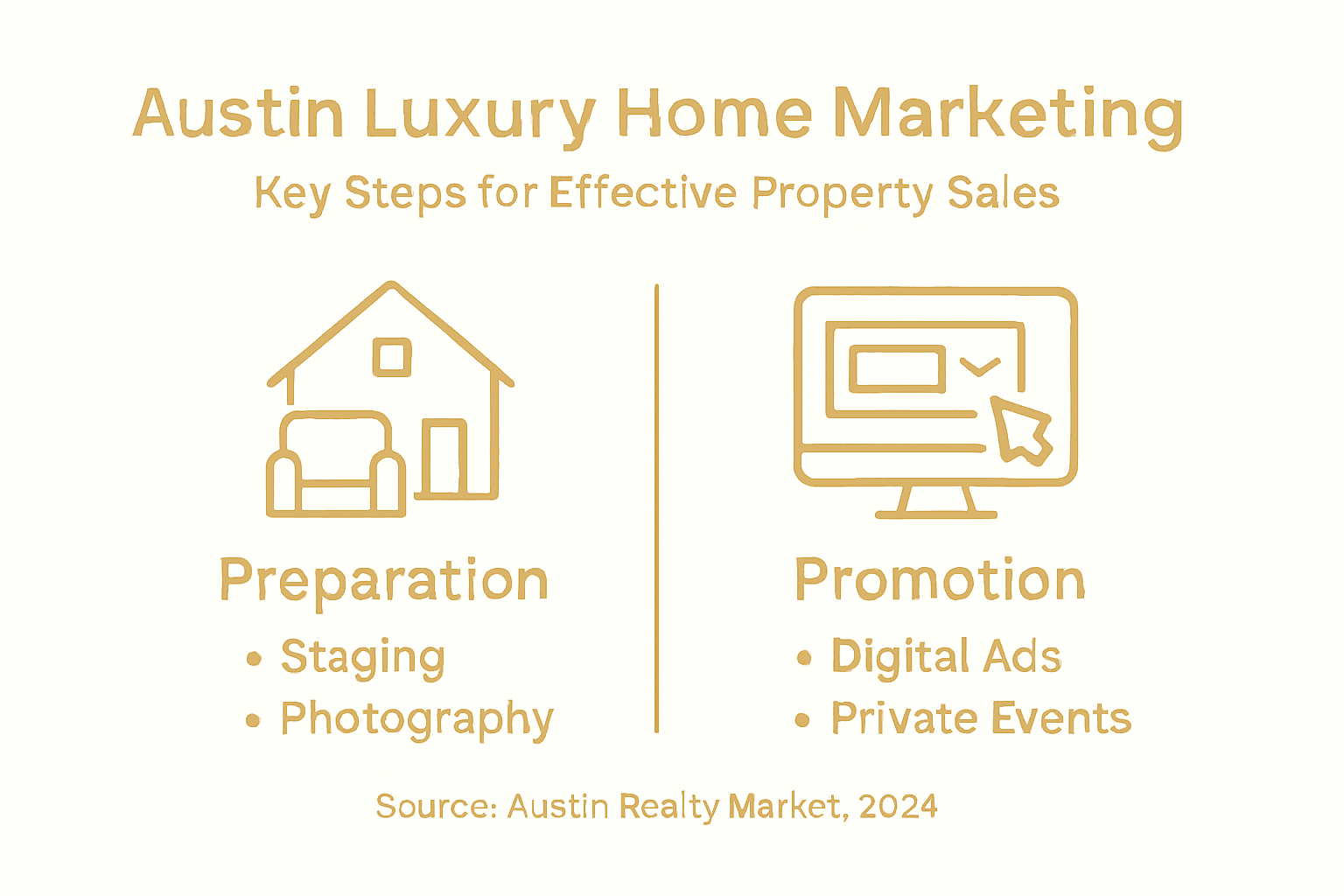
The most successful luxury real estate marketing strategies combine multiple approaches rather than relying on any single tactic. Today’s market demands both traditional and innovative methods working in concert. Digital and experiential strategies including online platforms, virtual reality tours, and virtual staging now complement the traditional open houses and print advertising that once dominated luxury sales. The choice isn’t between old and new, but rather how to orchestrate them strategically based on your specific property and target buyer profile.
Digital Marketing Approaches
Online visibility has become non-negotiable for luxury homes. High-resolution photography and videography form the foundation, showcasing your property’s scale, finishes, and spatial flow in ways that print advertisements simply cannot. Virtual tours and 3D walkthroughs allow qualified buyers to explore your home before scheduling an in-person showing, filtering out unserious prospects early. Social media platforms targeting affluent demographics, paid search advertising for high-value properties, and email marketing to your agent’s network all drive qualified traffic. Sophisticated data analytics help identify which marketing channels deliver the strongest buyer response, allowing you to allocate resources where they matter most. The competitive advantage often goes to sellers who embrace this digital infrastructure rather than those clinging to traditional methods alone.
Experiential and Offline Marketing Approaches
Despite digital innovation, luxury real estate remains an intensely experiential purchase. Nothing replaces the feeling of walking through a soaring foyer, experiencing natural light, or imagining gatherings in a thoughtfully designed living space. Exclusive private showings, curated open houses, and broker previews create controlled environments where qualified buyers experience your home at its best. Understanding global interior design trends and styling your home accordingly amplifies emotional connection during these experiences. Print materials including glossy brochures, custom direct mail to high-net-worth neighborhoods, and advertising in luxury lifestyle publications reach affluent audiences who still value tactile, curated marketing pieces.
Here is a comparison of key digital versus experiential marketing approaches for luxury real estate:
| Approach Type | Main Tactics | Buyer Impact | Strategic Benefit |
|---|---|---|---|
| Digital | Virtual tours, online ads | High visibility, easy access | Fast filtering, wider reach |
| Experiential | Private showings, print ads | Emotional engagement, trust | Stronger offers, exclusivity |
Market Segmentation and Adaptive Strategy
Successful approaches respond to changing market conditions and target specific buyer segments. A corner lot estate in Westlake appeals to different buyers than a lakefront property in Lake Austin. One requires positioning around privacy and architectural significance; the other emphasizes waterfront lifestyle. Adaptive and creative strategies that emphasize understanding buyer demand for different property types ensure your marketing message reaches the right people with the right value proposition. This might mean specialized marketing to relocation companies for corporate executives, international buyer networks for overseas investment interest, or lifestyle publications targeting empty-nesters downsizing into modern luxury.
Pro tip: Combine your strongest digital channels with at least one exclusive in-person experience; data shows that buyers who attend curated private showings convert to serious offers significantly faster than those relying on virtual tours alone.
Key Strategies for Austin’s Luxury Listings
Austin’s luxury market operates differently than national trends suggest. Your Tarrytown estate or Westlake lakefront property requires strategies specifically calibrated to local buyer psychology, market rhythms, and competitive positioning. The first critical strategy involves understanding that Austin’s most successful luxury agents work within exclusive professional networks that provide access to qualified buyers before properties hit mainstream sites. Exclusive professional networks like Commission.Co’s Clubhouse and the Austin Luxury Network connect top agents with off-market listing opportunities, buyer communication channels, and collaborative marketing support that fundamentally changes how your property reaches the right audience. These networks function as the real market for luxury properties, where serious transactions occur before public showings ever happen. Without access to this ecosystem, your home competes in a much larger, noisier pool of listings.

Positioning Around Austin’s Lifestyle
Austin’s luxury buyers aren’t simply purchasing real estate. They’re investing in a lifestyle centered around outdoor living, cultural access, natural beauty, and an unmistakable Austin identity. Successful marketing strategy emphasizes how your property enables this lifestyle rather than simply listing features. A Westlake home’s advantage isn’t just its architecture, but how it facilitates gathering, entertaining, and connection to what makes Austin desirable. Tarrytown properties benefit from positioning around walkability to local restaurants and galleries combined with generational home quality. Home preparation and presentation aligned with current interior design preferences ensures your home reflects buyer aspirations about how they’ll actually live in it. This means professional staging that emphasizes spatial flow, outdoor entertaining potential, and the specific lifestyle narrative that resonates with Austin’s affluent demographic.
Market Timing and Discretion
Austin’s luxury market requires strategic timing awareness. Interest rate environments directly influence luxury buyer behavior and willingness to transact. Understanding how federal interest rates affect property values helps position your listing at optimal moments. Beyond timing, discretion itself becomes a marketing tool. High-net-worth sellers often value privacy and controlled exposure more than maximum showings. Targeted marketing to pre-screened qualified buyers, private broker previews, and curated showings by appointment protect your privacy while reaching exactly the buyers most likely to move forward.
Data-Driven Buyer Targeting
Effective Austin luxury marketing uses sophisticated data analysis to identify and reach qualified buyers. Geographic analysis reveals which neighborhoods currently attract similar buyer profiles. Demographic targeting focuses marketing spend on affluent communities within Austin and relocation markets that historically feed Austin’s luxury segment. Online behavior tracking shows which buyers actively researching luxury Austin properties warrant personal outreach. This combination of network access, lifestyle positioning, timing awareness, and data intelligence creates a marketing approach specifically designed for Austin’s competitive luxury market rather than applying national strategies to local opportunities.
Pro tip: Secure representation with an agent who maintains active access to exclusive buyer networks and off-market listing platforms; these connections typically result in shorter marketing times and higher sale prices than properties relying solely on public-facing marketing channels.
Brand Storytelling and Visual Positioning
Your luxury home isn’t just a property listing. It’s a narrative waiting to be told. The difference between a home that sells for list price and one that commands a premium often comes down to how effectively the marketing tells its story. Storytelling and consistent messaging help real estate professionals differentiate their offerings and create emotional connections with buyers who have unlimited options. For a Tarrytown residence built in 1987 by a respected architect, the story isn’t about square footage. It’s about the vision that guided its design, the craftsmanship evident in every detail, and how generations of families have celebrated life within its walls. For a Westlake contemporary, the narrative centers on how thoughtful design creates seamless living for a modern, sophisticated buyer. These stories transform listings into compelling invitations that resonate with your ideal buyer’s aspirations.
Visual Positioning Through Professional Imagery
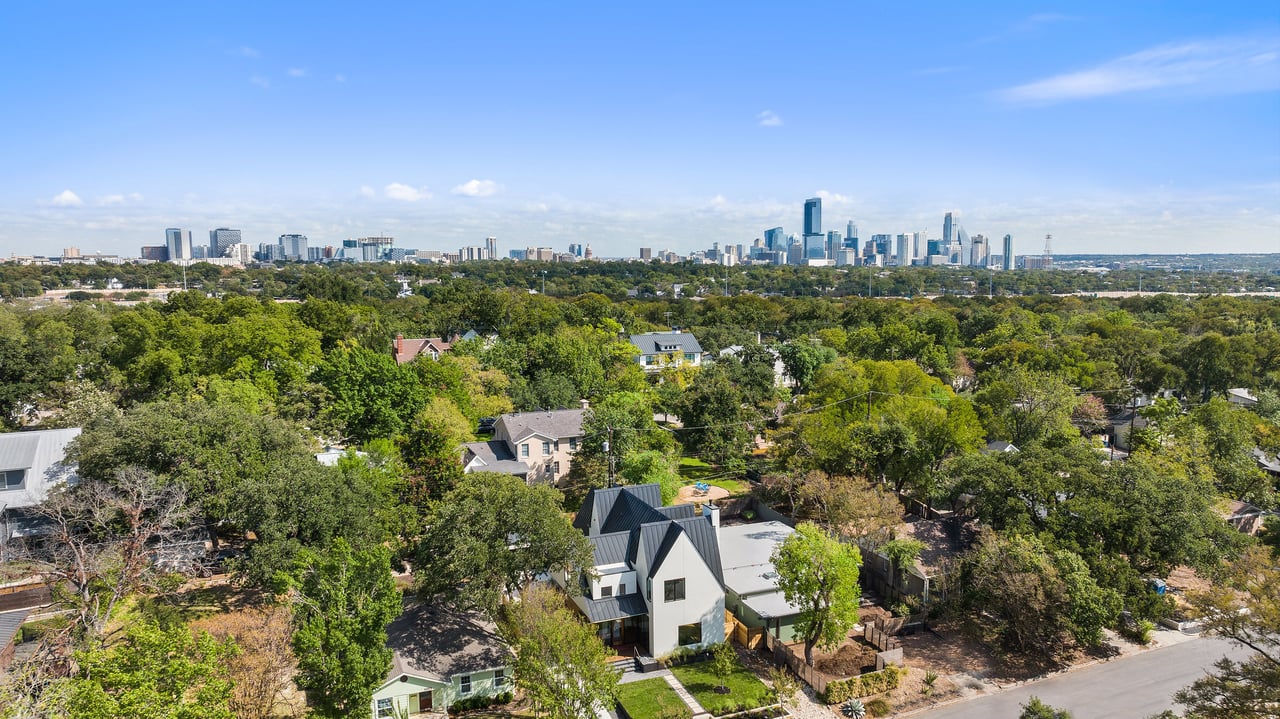
Before anyone reads your property’s story, they see it. Professional photography and videography form the visual foundation of brand positioning. This goes far beyond adequate documentation. Aerial drone photography reveals site context, landscaping, and spatial relationships that ground level shots cannot convey. Twilight photography captures how evening lighting transforms your home’s exterior. Interior photography emphasizes spatial flow, natural light quality, and the relationship between rooms. Cinematic video tours create emotional engagement by showing how a family might actually move through and experience the space. The visual narrative should feel cohesive, intentional, and aligned with your home’s positioning. A transitional Westlake estate demands different visual treatment than a modern glass and steel architectural statement. Color palettes, lighting choices, and composition all communicate something about the property’s character before a single word is read.
Creating Unique Value Propositions
What makes your home irreplaceable? Market positioning requires defining unique value propositions based on your property’s distinct characteristics and the market context. Is it the pedigree of the original architect? The unobstructed view corridor? The established trees that took decades to mature? The location that offers privacy yet walkability? The renovation that preserved original character while adding contemporary comfort? Your marketing narrative weaves these elements into a compelling reason why this specific home matters to someone specific. A Tarrytown Tudor doesn’t compete on being modern. It wins by articulating why authenticity, established neighborhood character, and architectural significance hold enduring value. This clarity of positioning attracts buyers aligned with what you’re actually selling rather than those shopping primarily on price.
Consistency Across All Marketing Channels
Your brand story must remain recognizable whether a buyer encounters it on Instagram, in a luxury magazine, through a private showing brochure, or walking through your front door. Consistent visual language, messaging tone, and value proposition reinforce each other. Your color palette in photography carries through to printed materials. Your narrative voice in listing descriptions echoes in your broker preview presentation. This consistency builds recognition and trust. Buyers begin to understand what they’re buying before they ever step inside. By the time they arrive for a showing, the emotional foundation has already formed, making the in-person experience confirmation rather than discovery.
Pro tip: Invest in professional copywriting that articulates your home’s unique value proposition in your listing description before any photography or marketing materials are created; this narrative clarity ensures all visual and messaging elements reinforce rather than contradict each other.
Financial Impact and ROI for Sellers
When you list a luxury home, you’re not just executing a transaction. You’re making a financial decision with measurable consequences. The difference between selling for list price versus 5 percent below, or closing in sixty days versus one hundred twenty days, compounds into significant dollars. This is where real estate marketing’s financial impact becomes undeniable. Strategic marketing directly influences two critical variables that determine your net proceeds: the sale price and the time required to close. Research shows that real estate agents vary significantly in their ability to negotiate higher prices and reduce time on market. A top-performing agent in Austin’s luxury segment might consistently achieve sale prices within 2 to 4 percent of list price while marketing properties in forty five to sixty days. An underperforming agent might see properties languish for one hundred eighty plus days at discounted prices. For a $2 million Westlake property, that difference represents $40,000 to $80,000 in immediate financial impact before even considering carrying costs.
The Hidden Cost of Extended Marketing Periods
Time on market carries real financial weight that many sellers overlook. Property taxes, insurance, utilities, landscaping maintenance, and opportunity costs accumulate daily while your home sits unsold. For luxury properties, add to this the psychological burden of a stale listing, which signals to market participants that something is wrong. A property that doesn’t sell in the expected timeframe begins attracting lower offers as buyers perceive desperation. Consider a $1.5 million Tarrytown estate carrying monthly holding costs of approximately $3,500, including taxes, insurance, and maintenance. An extra sixty days on market costs $7,000 in direct holding expenses alone. Yet the actual financial damage extends beyond these direct costs. A property that sits for one hundred fifty days typically sells for 3 to 7 percent less than comparable homes that sold in ninety days. That same $1.5 million property losing 5 percent in sale price due to extended marketing represents a $75,000 loss, far exceeding any holding cost consideration. Strategic marketing that positions your home correctly from day one, reaches pre-qualified buyers through exclusive networks, and presents your property compellingly can shorten marketing time significantly while protecting your sale price.
Consider these potential financial outcomes for luxury home sellers in Austin:
| Scenario | Time on Market | Typical Price Adjustment | Estimated Carrying Cost |
|---|---|---|---|
| Strategic marketing | 45-60 days | 2-4% below list price | $3,500-$7,000 |
| Minimal marketing | 120-180 days | 5-7% below list price | $7,000-$21,000 |
Understanding Real Estate as a Financial Asset
Residential real estate returns approximate 2.3 percent annually net of costs, which means appreciation alone is modest. Your wealth building through real estate depends heavily on factors beyond market appreciation: the initial purchase price, any improvements made, and critically, the sale price you achieve. Marketing that elevates perceived value and attracts the right buyer directly impacts this financial outcome. A seller who invests 0.5 to 1 percent of sale price in strategic marketing might recover that investment instantly through a sale price elevated by 2 to 3 percent compared to minimal marketing approaches. For high-net-worth sellers, this isn’t just mathematics. Professional marketing represents invested capital that generates measurable financial returns through higher sale prices and reduced holding costs.
Pro tip: Request a comparative market analysis showing not just list prices and sale prices, but specifically the average days on market and final sale price percentages for luxury properties marketed with comprehensive strategies versus minimal approaches in your neighborhood.
Common Mistakes and How to Avoid Them
Luxury real estate marketing fails not because sellers lack beautiful homes, but because they approach it without strategic clarity. The most damaging mistakes stem from fundamentally flawed assumptions about how luxury buyers actually behave and what marketing tactics actually work. The first critical error is treating your Tarrytown or Westlake home like any other property, applying generic marketing approaches designed for volume sales rather than high-value transactions. Luxury marketing requires a completely different philosophy. Casting the widest net possible actually undermines your interests. Broad exposure to unqualified buyers creates tire kickers, time wasters, and downward price pressure from people shopping on emotion rather than readiness to transact. The antidote is precise targeting. Identify exactly who your ideal buyer is, then concentrate marketing resources on reaching that specific person. Is your buyer a relocating corporate executive? An empty-nester downsizing from a larger estate? A second home buyer seeking Austin’s lifestyle? Each requires distinctly different messaging and channels. Common marketing mistakes include failing to define target audiences and relying on single marketing channels, both of which dramatically reduce effectiveness.
The Over-reliance on List Portals
Many sellers believe that listing on Zillow, Realtor.com, and the multiple listing service constitutes marketing. This approach guarantees visibility but doesn’t guarantee success. These platforms function as commodity marketplaces where homes compete primarily on price and proximity filters. Your luxury property loses its differentiation in this environment. Conversely, implementing multi-channel strategies that integrate exclusive network access, targeted digital advertising, curated print materials, and strategic broker relationships fundamentally changes buyer quality and offer terms. A property marketed exclusively through list portals attracts buyers shopping by algorithm. A property marketed through exclusive networks attracts serious, qualified buyers who have already been pre-screened and pre-motivated. The difference in offer quality and negotiating position is substantial.
Neglecting Video and Analytics-Driven Optimization
Yet another widespread mistake is skipping quality video content, assuming that photography suffices for luxury properties. Video doesn’t just show a home. It creates emotional experience. It demonstrates spatial flow, natural light quality, and how a family might actually live in the space. Similarly, failing to monitor marketing performance data leaves you blind to what’s working and what isn’t. Continuous monitoring and analytics-driven adjustments allow you to optimize campaigns based on real buyer behavior rather than assumptions. Which marketing channels deliver the most qualified showings? Which photos generate the highest engagement? Which neighborhoods are currently attracting qualified buyers? Data answers these questions. Without it, you’re guessing.
Poor Lead Follow-up and CRM Management
Marketing generates leads, but leads without follow-up become lost opportunities. Serious buyers often need multiple touchpoints before becoming ready to transact. A buyer who viewed your home last month might become ready to make an offer when interest rates drop or their corporate transfer finalizes. Without organized lead management tracking buyer status and automating appropriate follow-up, you miss these opportunities. Implementing customer relationship management tools ensures that every qualified prospect remains engaged and receives relevant communication at the right moment.
Pro tip: Before marketing your home, document your ideal buyer profile in writing, including their likely motivations, timeline, and price range; then review all marketing channels and messaging to confirm they actually reach that specific person rather than casting indiscriminate nets.
Elevate Your Austin Luxury Home Sale With Expert Real Estate Marketing
Selling a luxury property in Austin requires more than listing your home online. As the article highlights, strategic marketing rooted in precise buyer targeting, exclusive network access, professional storytelling, and visual positioning is essential to command top dollar and minimize time on market. If you are in Westlake, Tarrytown, or surrounding neighborhoods, you understand that generic approaches lead to lost value and longer holding costs. You need a marketing partner who blends a developer’s eye for architectural integrity with data-driven insights and a white-glove sales process.
Discover how the Mogavero Group steps beyond typical marketing by meticulously preparing your home, crafting unique narratives that resonate with affluent buyers, and leveraging exclusive networks that many luxury sellers cannot access. The team’s design-driven approach and focus on delivering measurable financial impact ensure you maximize your sale price while preserving discretion. Don’t leave your sale to chance when your investment deserves sophisticated positioning and precise execution. Visit Mogavero Group to explore tailored solutions for Austin luxury listings and schedule your private consultation now.
Learn more about how strategic storytelling and visual positioning fuel sales success at Mogavero Group. Elevate your property’s market presence with a proven team fluent in Austin’s luxury real estate dynamics. Take the vital step toward your best possible outcome today.
Frequently Asked Questions
What is the purpose of real estate marketing for luxury properties?
The purpose of real estate marketing for luxury properties is to establish a competitive advantage, facilitate transactions, and protect the property’s perceived value through strategic positioning and professional branding.
How does digital marketing impact luxury real estate sales?
Digital marketing enhances luxury real estate sales by increasing online visibility through high-resolution photography, virtual tours, targeted advertising, and data analytics to reach qualified buyers more effectively.
What are some common mistakes in luxury real estate marketing?
Common mistakes include treating luxury homes like standard properties, relying too much on listing portals, neglecting professional video content, and failing to follow up with leads effectively.
How can storytelling enhance the marketing of a luxury home?
Storytelling enhances luxury home marketing by creating emotional connections with potential buyers, transforming the property into a narrative that highlights its unique features and the lifestyle it offers, thus increasing its perceived value and desirability.
Recommended
- Top Austin real estate agent | Austin relocation specialist
- Top Global Interior Design Trends and Their Influence on Luxury Homes | Blog | Mogavero Group
- Everything You Need to Know About Preparing Your Home Before Selling | Blog | Mogavero Group
- How Federal Interest Rates Affect Luxury Property Values in Tarrytown | Blog | Mogavero Group
- Discover the Luxe Life: Top Luxury Apartments Rentals Near You - Luxury Apartments for Rent in Boca Raton | Premium Boca Raton Apartments | Aapartments Boca Raton