
Negotiating in Real Estate – Maximizing Value in Austin
Every high-value property deal in Austin presents a unique set of challenges where negotiation skill can define your financial outcome. In this competitive market, real estate negotiation is more than just settling on a price—it is a nuanced strategy that aligns diverse interests, manages risk, and creates pathways for lasting advantage. Understanding value-creating negotiation frameworks equips both buyers and sellers with the tools to achieve outstanding results while protecting critical assets.
Table of Contents
- Defining Negotiation In Real Estate Transactions
- Types Of Real Estate Negotiations And Key Distinctions
- How Negotiation Shapes Deal Outcomes And Value
- Roles And Responsibilities In Negotiation Processes
- Risks, Pitfalls, And Legal Implications For High-Net-Worth Deals
Key Takeaways
| Point | Details |
|---|---|
| Effective Negotiation is Collaborative | Approach negotiations as opportunities for mutual benefit, rather than adversarial confrontations. |
| Understanding Market Dynamics is Essential | Deep market knowledge and emotional intelligence are critical for successful negotiations in real estate. |
| Different Negotiation Types Have Varying Outcomes | Recognize the impact of negotiation styles—opt for value-creating strategies to foster long-term relationships. |
| Risk Management is Crucial for High-Net-Worth Deals | Engage specialized legal counsel to navigate complex legalities and protect against potential financial and legal risks. |
Defining Negotiation in Real Estate Transactions
Negotiation in real estate represents far more than a simple transactional exchange—it’s a strategic dance of communication, psychology, and calculated risk management. In the high-stakes Austin market, negotiation transforms from a basic skill into a sophisticated art form that can dramatically impact property values, investment returns, and long-term financial outcomes.
At its core, real estate negotiation involves complex interactions where multiple parties seek to achieve their desired objectives through strategic communication. These negotiations encompass far more than just price—they include critical elements like:
- Property condition and potential repairs
- Closing timelines
- Contingency terms
- Financing arrangements
- Included fixtures and personal property
- Potential future considerations
Successful negotiators understand that every interaction carries potential value. They approach discussions with a comprehensive view, recognizing that seemingly minor details can significantly influence the overall transaction. This means preparing meticulously, understanding market dynamics, and developing a nuanced approach that balances assertiveness with collaborative problem-solving.
The negotiation process in Austin’s competitive real estate landscape requires deep market knowledge, emotional intelligence, and strategic thinking. Professionals must navigate complex local market conditions, understanding neighborhood-specific trends, recent comparable sales, and unique property characteristics that can influence valuation. Strategic market analysis provides critical insights that inform negotiation strategies.
Pro tip: Always approach real estate negotiations as collaborative problem-solving rather than adversarial confrontations, focusing on creating mutually beneficial outcomes that satisfy all parties’ core objectives.
Types of Real Estate Negotiations and Key Distinctions
Real estate negotiations are not monolithic but instead represent a complex spectrum of strategic interactions, each with unique characteristics and potential outcomes. Negotiation strategies reveal three primary approaches that define how parties interact and ultimately resolve transactions: win-lose, naive win-win, and value-creating win-win strategies.
The three fundamental negotiation types in real estate include:
- Win-Lose Negotiations: Characterized by zero-sum thinking where one party’s gain is another’s loss
- Naive Win-Win Negotiations: Well-intentioned but often superficial attempts at mutual compromise
- Value-Creating Win-Win Negotiations: Strategic, collaborative approaches designed to expand potential mutual benefits
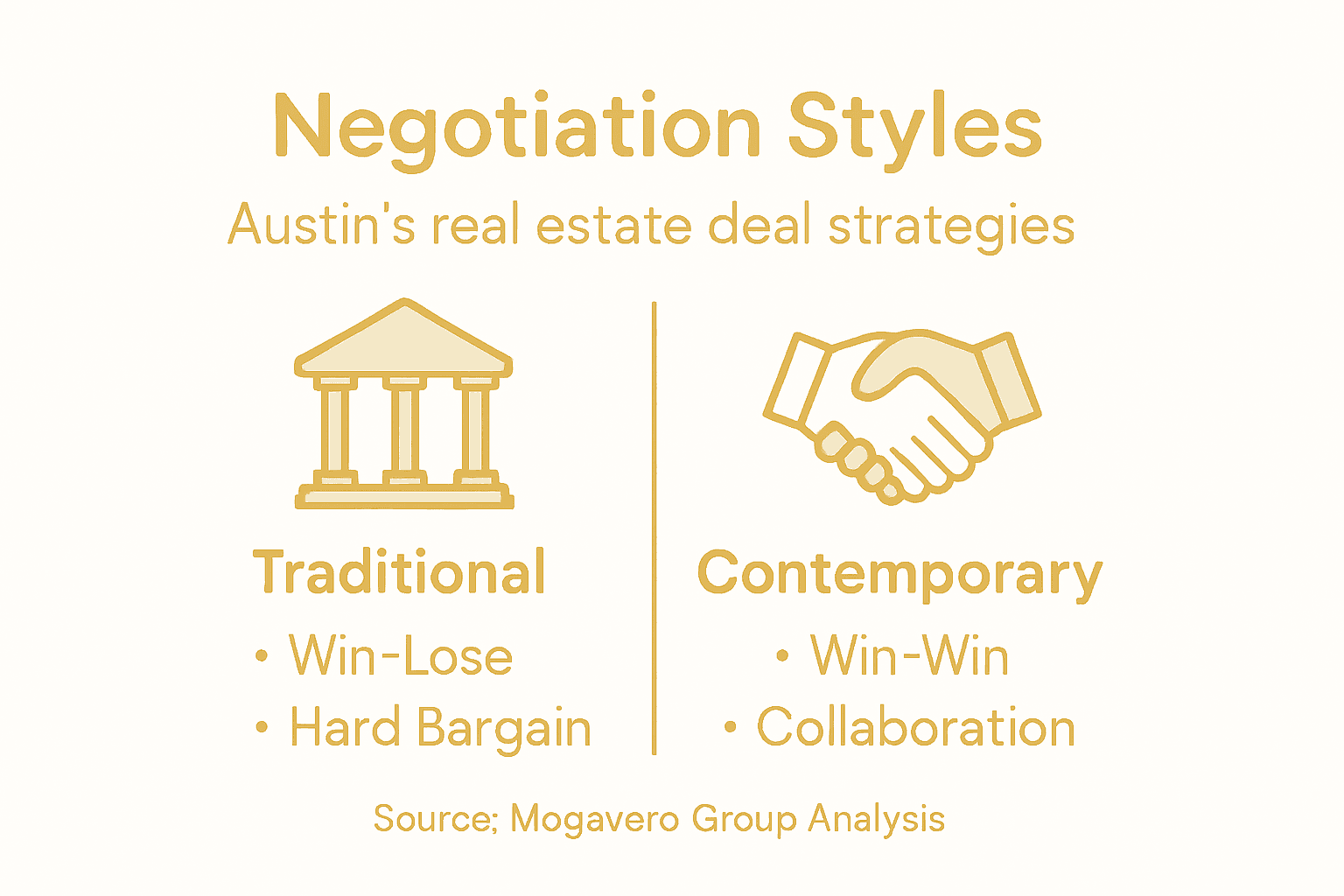
Traditional real estate negotiations often defaulted to win-lose models, where agents and clients viewed transactions as competitive encounters. Competitive negotiations typically involve hard bargaining, positional tactics, and minimal flexibility. In these scenarios, participants focus narrowly on immediate financial outcomes, potentially sacrificing long-term relationship value and overlooking nuanced opportunities for mutual gain.
Contemporary negotiation frameworks, however, emphasize a more sophisticated collaborative approach. These models recognize that real estate transactions are complex ecosystems involving multiple stakeholders with interconnected interests. By adopting a value-creation mindset, negotiators can transform potentially adversarial interactions into opportunities for innovative problem-solving, where each party’s core objectives can be strategically addressed.
Here’s a comparison of real estate negotiation types and their long-term impact:
| Negotiation Type | Typical Approach | Potential Long-Term Outcome |
|---|---|---|
| Win-Lose | Competitive, positional | Strained relationships, lost opportunities |
| Naive Win-Win | Superficial compromise | Missed value, limited trust |
| Value-Creating Win-Win | Collaborative, strategic | Strong relationships, expanded benefits |
Successful negotiators view transactions not as battles to be won, but as collaborative opportunities to create shared value.
Pro tip: Always enter real estate negotiations with a comprehensive understanding of not just your own objectives, but the underlying motivations and potential constraints of all parties involved.
How Negotiation Shapes Deal Outcomes and Value
Negotiation transcends mere price discussion—it’s a strategic mechanism that fundamentally determines the entire trajectory of a real estate transaction. Negotiation intensity plays a critical role in shaping deal outcomes, influencing everything from financial returns to long-term relationship dynamics between buyers, sellers, and stakeholders.
The impact of negotiation on deal value manifests through several key dimensions:
- Financial pricing and terms
- Risk allocation and management
- Contractual flexibility
- Future relationship potential
- Strategic positioning for subsequent transactions
- Emotional and psychological satisfaction of involved parties
Traditional negotiation approaches often focused narrowly on immediate financial gains, overlooking the broader ecosystem of value creation. Strategic negotiators understand that true value extends beyond the initial transaction price, encompassing nuanced elements like future market potential, relationship capital, and potential collaborative opportunities.
Negotiation science reveals that collaborative approaches consistently outperform adversarial tactics. Successful negotiations require a sophisticated understanding of market dynamics, psychological insights, and the ability to create mutually beneficial frameworks that transform potential zero-sum encounters into expansive value-generation opportunities.
Masterful negotiation is an art of transforming constraints into opportunities, turning seemingly limited resources into expanded value for all parties.
Pro tip: Develop a comprehensive negotiation strategy that considers not just the immediate transaction, but the potential long-term relational and market implications of each decision.

Roles and Responsibilities in Negotiation Processes
Real estate negotiations represent a complex ecosystem of interconnected stakeholders, each bringing unique perspectives, objectives, and responsibilities to the transaction. Negotiation stakeholders include buyers, sellers, agents, brokers, attorneys, and financial advisors—each playing a critical role in shaping the final outcome of the property exchange.
The primary roles in real estate negotiations typically encompass:
- Buyers: Seeking optimal property value and favorable transaction terms
- Sellers: Aiming to maximize financial returns and secure smooth transaction conditions
- Real Estate Agents: Facilitating communication and strategic positioning
- Attorneys: Ensuring legal compliance and protecting client interests
- Lenders: Managing financial parameters and risk assessment
- Appraisers: Providing objective property valuation insights
Each stakeholder brings specific expertise and strategic objectives to the negotiation table. Effective communication becomes paramount, requiring participants to balance individual goals with collaborative problem-solving approaches. Buyers must articulate their requirements while remaining flexible, sellers need to understand market dynamics, and agents must skillfully navigate the complex interpersonal and transactional landscape.
The following table outlines key stakeholder roles in real estate negotiations and their unique contributions:
| Stakeholder | Primary Responsibility | Strategic Contribution |
|---|---|---|
| Buyer | Seek favorable terms | Market insight, flexibility |
| Seller | Maximize financial outcome | Knowledge of property, negotiation leverage |
| Agent/Broker | Facilitate communication | Bridge interests, advisory expertise |
| Attorney | Ensure legal compliance | Risk mitigation, contract review |
| Lender | Financial vetting and approval | Funding, risk assessment |
| Appraiser | Value property objectively | Aid in pricing, reduce dispute risk |
Negotiation responsibilities extend beyond traditional transactional interactions. Modern real estate negotiations demand ethical conduct, transparent information sharing, and a sophisticated understanding of market conditions. Successful negotiators must manage power dynamics, legal constraints, and potential information asymmetries while maintaining professional relationships and pursuing mutually beneficial outcomes.
Masterful negotiation transforms individual stakeholder interests into a cohesive, value-generating collaborative strategy.
Pro tip: Approach each negotiation as a collaborative problem-solving exercise, where understanding every stakeholder’s underlying motivations is just as important as the specific transaction details.
Risks, Pitfalls, and Legal Implications for High-Net-Worth Deals
High-net-worth real estate transactions represent complex ecosystems of financial and legal risk, where even minor oversights can result in substantial financial consequences. Legal complexities demand meticulous attention to detail, sophisticated risk management strategies, and comprehensive understanding of potential pitfalls that could derail multimillion-dollar deals.
The primary risks in high-stakes real estate negotiations include:
- Contractual ambiguity: Poorly defined terms leading to potential disputes
- Disclosure failures: Inadequate property information risking legal challenges
- Financial misrepresentation: Potential fraud or intentional misleading of parties
- Contingency vulnerabilities: Incomplete protective clauses exposing transaction to unexpected risks
- Jurisdictional compliance issues: Violations of local real estate regulations
- Due diligence limitations: Insufficient investigation of property background
Successful high-net-worth transactions require an elevated level of professional scrutiny. Strategic risk management involves comprehensive due diligence, engaging specialized legal counsel, and developing multilayered contract protections that anticipate potential complications before they emerge. Sophisticated investors understand that protecting their interests requires more than standard transactional approaches—it demands a proactive, forensic examination of every potential vulnerability.
Contract negotiation strategies emphasize the critical importance of precise legal drafting and thorough risk assessment. Experienced negotiators recognize that protecting high-value assets requires anticipating potential disputes, understanding jurisdictional nuances, and constructing agreements that provide robust legal safeguards while maintaining transaction flexibility.
Masterful risk management in real estate negotiations transforms potential vulnerabilities into strategic opportunities for protection and value creation.
Pro tip: Always engage specialized legal counsel with extensive high-net-worth transaction experience to conduct a comprehensive risk assessment before finalizing any significant real estate deal.
Master Every Aspect of Real Estate Negotiations with Mogavero Group
Navigating negotiation challenges is crucial when buying or selling in Austin’s competitive real estate market. This article highlights the importance of strategic communication, understanding multiple stakeholder roles, and managing risks effectively to maximize value. If you aim to transform complex negotiations into collaborative, value-creating opportunities, relying on expert guidance is essential.
Mogavero Group offers unparalleled expertise grounded in meticulous preparation, deep market insight, and design-driven positioning to give you a decisive advantage. Our approach elevates homes and negotiations alike by combining architectural vision with data-backed strategy. Whether you are dealing with high-stakes deals in Westlake or intricate buyer-seller dynamics in Tarrytown, our team ensures you are equipped to handle the nuances of every negotiation detail, from pricing to contract terms.

Unlock the power of expert negotiation representation today. Visit Mogavero Group and discover how our white-glove guidance across Austin neighborhoods can help you craft successful deals that protect your investment and build lasting relationships. Start maximizing your real estate value with a team that sees beyond the transaction and prepares you for every opportunity.
Frequently Asked Questions
What are the key elements of negotiation in real estate transactions?
Negotiation in real estate encompasses aspects like property condition, closing timelines, contingency terms, and financing arrangements, along with pricing. Each of these elements plays a crucial role in achieving a successful transaction.
How can I improve my negotiation strategy in real estate?
To enhance your negotiation strategy, focus on collaboration rather than competition, prepare thoroughly by understanding market dynamics, and be flexible in your discussions. Recognizing the interests of all parties involved can lead to mutually beneficial outcomes.
What are the differences between win-lose and value-creating negotiations?
Win-lose negotiations involve a zero-sum mindset, where one party’s gain is another’s loss. In contrast, value-creating negotiations focus on collaboration, aiming to expand benefits for all parties involved, which can lead to stronger relationships and increased overall value.
What risks should I be aware of in high-net-worth real estate deals?
In high-net-worth transactions, it’s essential to be mindful of risks such as contractual ambiguity, disclosure failures, financial misrepresentation, and compliance issues. Engaging specialized legal counsel and conducting thorough due diligence can help mitigate these risks.