
Pocket Listing Real Estate – Discretion and Value Impacts

Privacy and exclusivity drive real estate decisions for discerning buyers and sellers in Westlake and Tarrytown, Austin. For those seeking control over property exposure and curated buyer interactions, pocket listings offer a rare advantage. This approach delivers confidential access to some of the market’s most desirable homes, giving you the inside track on unique opportunities while protecting your privacy and investment strategy.
Table of Contents
- What Is a Pocket Listing in Real Estate
- How Pocket Listings Differ From Public Listings
- Types of Pocket Listings and Key Features
- Legal, Regulatory, and Ethical Framework
- Risks, Costs, and Market Implications for Sellers and Buyers
- Accessing Pocket Listings and Alternatives
Key Takeaways
| Point | Details |
|---|---|
| Pocket Listings Offer Privacy | These listings are exclusive and off-market, allowing sellers to control exposure and maintain confidentiality during the sale process. |
| Market Differences | Pocket listings differ significantly from public listings in terms of buyer access, exposure, and marketing strategies. |
| Strategic Seller Control | They allow sellers to curate their transaction experience, making it suitable for high-net-worth individuals looking to navigate complex sales discreetly. |
| Legal and Ethical Considerations | Real estate professionals must adhere to regulations and ethical standards when handling pocket listings to ensure compliance and protect client interests. |
What Is a Pocket Listing in Real Estate
A pocket listing represents an exclusive, off-market real estate transaction managed by a single broker without widespread public exposure. Unlike traditional property sales, these private listings remain strategically hidden from multiple listing services (MLS) and broader real estate networks.
In the luxury Austin real estate market, pocket listings serve sophisticated sellers seeking maximum privacy and controlled property marketing. Brokers with established community connections can leverage these exclusive listings to carefully manage property introductions, ensuring discretion and strategic positioning. Key characteristics of pocket listings include:
- Restricted marketing exposure
- Private network distribution
- Highly targeted buyer outreach
- Confidential property presentation
- Controlled showing processes
Pocket listings emerge from specific seller motivations, such as maintaining personal privacy, testing market interest, or managing high-profile property transitions. Sellers opt for this approach when they want maximum control over the sales process and prefer a curated, selective approach to potential buyers.
Pocket listings represent a nuanced strategy for sellers who prioritize discretion over broad market exposure.
While pocket listings offer significant advantages, they also present potential drawbacks. The limited exposure might reduce competitive bidding and potentially impact final sale prices. Experienced real estate professionals carefully balance these considerations, ensuring sellers understand the trade-offs between privacy and market reach.
Pro tip: When considering a pocket listing, work exclusively with brokers who have deep local networks and proven track records of executing discreet, high-value transactions.
How Pocket Listings Differ From Public Listings
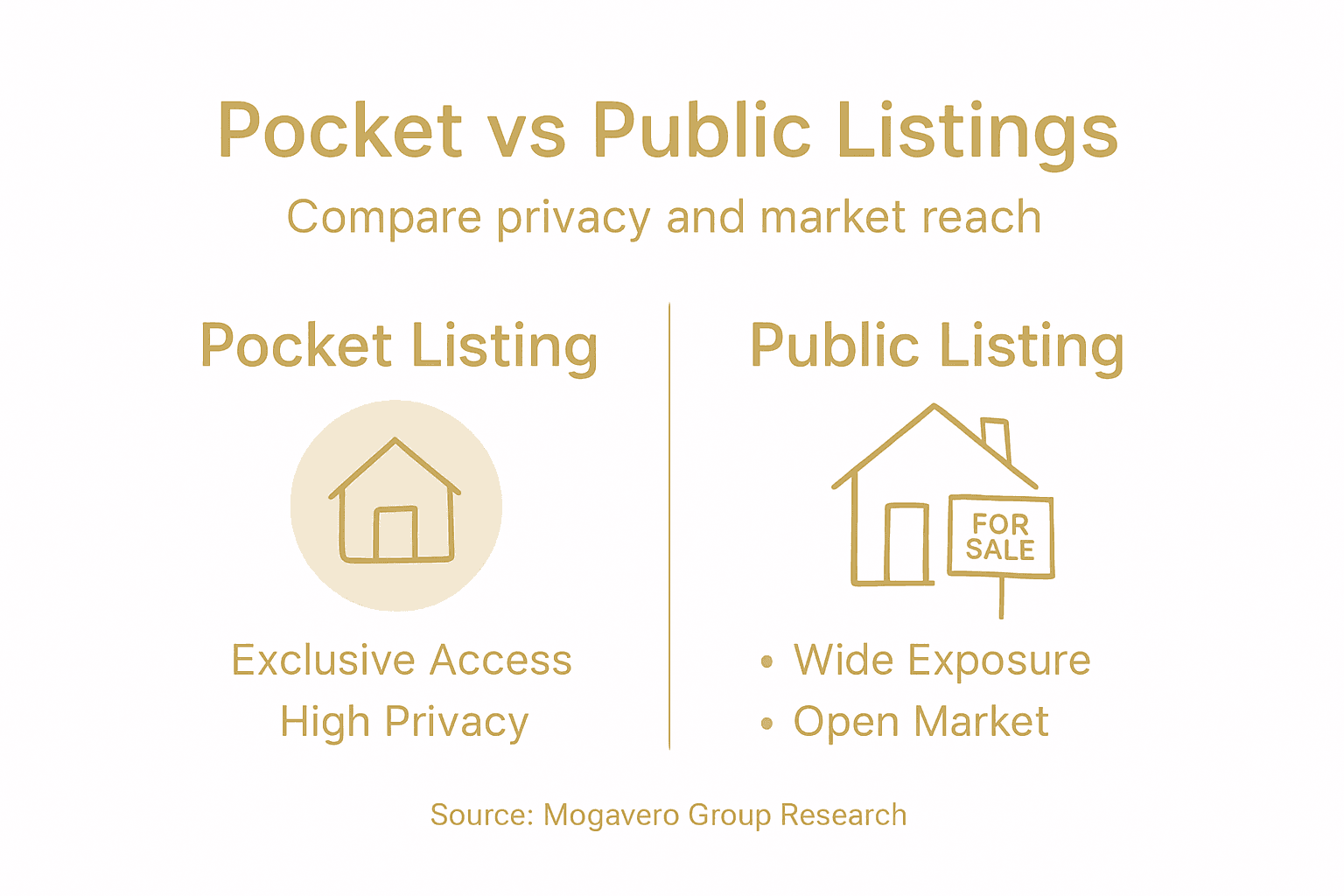
Public listings and pocket listings represent two dramatically different approaches to real estate marketing, each with unique strategies and outcomes for sellers in competitive markets like Austin. Confidential property transactions involve nuanced differences that sophisticated sellers must carefully evaluate.
The core distinctions between pocket and public listings can be summarized through several critical dimensions:
- Market Exposure
- Public Listings: Broad, platform-wide visibility
- Pocket Listings: Targeted, network-specific distribution
- Buyer Access
- Public Listings: Open to all qualified buyers
- Pocket Listings: Highly curated, selective buyer pool
- Marketing Strategy
- Public Listings: Standardized MLS presentation
- Pocket Listings: Personalized, discretionary approach
Public listings leverage multiple listing services to maximize property visibility, creating competitive environments that can drive bidding wars and potentially higher sale prices. In contrast, pocket listings prioritize seller privacy and controlled market introduction, often appealing to high-net-worth individuals seeking a more discreet sales process.
Pocket listings transform real estate marketing from a public spectacle into a strategic, invitation-only experience.
The trade-offs between these listing approaches are significant. While public listings offer broader market reach, they also introduce more complexity, including frequent showings, extended market time, and potential privacy intrusions. Pocket listings provide sellers with unprecedented control, allowing them to manage property exposure, buyer interactions, and negotiation dynamics with exceptional precision.
The following table compares public listings and pocket listings on core dimensions:
| Dimension | Public Listing | Pocket Listing |
|---|---|---|
| Market Visibility | Nationwide MLS exposure | Selective, private marketing |
| Buyer Interaction | Open showings and bidding | Controlled, invitation-only |
| Sale Timing | May be prolonged | Often faster and discreet |
| Negotiation Style | Standard process, more offers | Personalized, fewer offers |
Pro tip: Consult with experienced real estate professionals who understand the nuanced differences between public and pocket listings to determine the most advantageous strategy for your specific property and personal objectives.
Types of Pocket Listings and Key Features
Pocket listings represent a sophisticated approach to real estate marketing, offering multiple strategic variations tailored to different seller needs. Private property marketing encompasses several distinct types that provide sellers unprecedented control over their transaction process.
The primary categories of pocket listings include:
-
Exclusive Network Listings
- Limited to trusted broker networks
- Highly selective buyer introductions
- Maintained within professional circles
-
Pre-Market Listings
- Tested before full market release
- Gauging potential buyer interest
- Strategic pricing exploration
-
High-Privacy Listings
- Maximum confidentiality
- Minimal public exposure
- Targeted to ultra-high-net-worth clients
Each pocket listing type serves unique seller objectives, ranging from market testing to maintaining absolute discretion. Sophisticated sellers leverage these approaches to navigate complex real estate transactions with precision and strategic intent.

Here is a summary of pocket listing types and their strategic uses:
| Pocket Listing Type | Primary Goal | Ideal Seller Profile |
|---|---|---|
| Exclusive Network | Maintain privacy in network | High-profile individuals |
| Pre-Market | Test market without full launch | Sellers exploring pricing |
| High-Privacy | Ensure maximum confidentiality | Ultra-high-net-worth clients |
Pocket listings transform traditional real estate marketing into a curated, invitation-only experience.
The key features distinguishing pocket listings include unparalleled seller control, targeted marketing, and the ability to manage property exposure with exceptional granularity. Unlike traditional listings, these approaches allow sellers to maintain significant influence over the entire sales process, from initial market introduction to final negotiation.
Pro tip: Consult a specialized real estate professional who understands the nuanced strategies of different pocket listing types to design a custom marketing approach tailored to your specific property and personal objectives.
Legal, Regulatory, and Ethical Framework
The legal landscape surrounding pocket listings is complex, requiring careful navigation by real estate professionals to maintain compliance and ethical standards. Pocket listing regulations involve intricate frameworks designed to protect both sellers and potential buyers while preserving market transparency.
Key legal and ethical considerations include:
-
Fiduciary Responsibilities
- Duty of loyalty to clients
- Full disclosure requirements
- Confidentiality preservation
- Avoiding conflicts of interest
-
Regulatory Compliance
- National Association of Realtors guidelines
- Clear Cooperation Policy enforcement
- Fair housing law adherence
- Non-discriminatory marketing practices
Real estate agents must meticulously balance the discretion of pocket listings with broader market transparency obligations. The National Association of Realtors’ Clear Cooperation Policy mandates that properties marketed publicly must be submitted to multiple listing services within a specified timeframe, preventing prolonged off-market manipulations.
Ethical pocket listings prioritize client interests while maintaining professional integrity and market fairness.
The potential legal risks associated with pocket listings are significant. Improper implementation can result in violations of fair housing regulations, potential discrimination claims, and professional disciplinary actions. Sophisticated sellers and their representatives must understand the nuanced legal boundaries that govern these exclusive marketing strategies.
Pro tip: Work exclusively with real estate professionals who demonstrate a comprehensive understanding of pocket listing legal requirements and maintain transparent, ethical marketing practices.
Risks, Costs, and Market Implications for Sellers and Buyers
Pocket listings introduce a complex landscape of strategic advantages and potential financial trade-offs for both sellers and buyers in the real estate market. Property marketing risks demand careful consideration to balance exclusivity with potential market limitations.
Key risks and implications for sellers include:
-
Financial Considerations
- Potentially reduced sale price
- Limited competitive bidding
- Reduced market exposure
- Smaller potential buyer pool
-
Strategic Trade-offs
- Privacy versus maximum financial return
- Controlled marketing approach
- Personalized transaction management
- Reduced transaction complexity
For high-net-worth sellers in markets like Austin, pocket listings offer unprecedented transaction control. The ability to curate potential buyers and maintain strict confidentiality can outweigh traditional market exposure strategies, especially for unique or premium properties that require nuanced marketing approaches.
Pocket listings transform real estate transactions from public auctions to strategic, invitation-only opportunities.
Buyers engaging with pocket listings face unique challenges, including limited inventory access and potential missed opportunities. The reduced market transparency means sophisticated buyers must develop robust networks and relationships with well-connected real estate professionals to access these exclusive opportunities.
Pro tip: Engage real estate professionals with extensive networks and proven track records in executing pocket listings to maximize your strategic advantages in competitive markets.
Accessing Pocket Listings and Alternatives
Navigating the exclusive world of pocket listings requires strategic networking and specialized real estate connections. Accessing exclusive property networks demands sophisticated approaches beyond traditional real estate marketing channels.
Strategies for accessing pocket listings include:
-
Professional Network Development
- Build relationships with specialized real estate brokers
- Cultivate connections in luxury market segments
- Attend high-end real estate industry events
- Leverage personal and professional referral networks
-
Alternative Property Access Methods
- Coming soon listings
- Controlled off-market presentations
- Hybrid listing strategies
- Private brokerage preview platforms
Sophisticated buyers in markets like Austin understand that pocket listings represent more than just property transactions—they are curated experiences requiring deep industry relationships. The most successful buyers develop comprehensive strategies that extend beyond traditional multiple listing service (MLS) approaches.
Pocket listings transform real estate from a public marketplace into an invitation-only ecosystem of opportunities.
Alternative approaches provide additional flexibility for buyers seeking unique properties. Controlled marketing techniques enable buyers to access properties through nuanced, relationship-driven channels that prioritize discretion and targeted exposure.
Pro tip: Cultivate relationships with real estate professionals specializing in luxury and niche markets to expand your access to exclusive property opportunities.
Experience Discretion and Value with Expert Pocket Listing Support
Navigating the complexities of pocket listings demands deep local insight and strategic finesse to balance privacy with market value. If you seek to maintain confidentiality while maximizing your Austin property’s potential, you need a real estate team that understands this exclusive, invitation-only process. The key challenges include managing limited market exposure and ensuring the right buyers receive personalized outreach—goals we meet by combining architectural sensibility with targeted storytelling.

Discover how the Mogavero Group delivers white-glove guidance tailored for sellers and buyers in niche Austin neighborhoods. Our design-driven approach and trusted referral network give you both privacy and powerful market reach. Learn more about our unique strategies by visiting our website or connecting with us directly to start your discreet journey today.
Frequently Asked Questions
What is a pocket listing in real estate?
A pocket listing is an exclusive, off-market real estate transaction managed by a single broker without public exposure, keeping the listing hidden from multiple listing services (MLS).
How do pocket listings differ from public listings?
Pocket listings prioritize privacy and targeted marketing, limiting buyer access to a curated pool, while public listings offer broad market exposure to all qualified buyers through MLS.
What are the advantages of using a pocket listing?
Pocket listings provide sellers with maximum control over the sales process, ensuring discretion and the ability to manage buyer interactions and negotiations more selectively.
Are there risks associated with pocket listings?
Yes, potential risks include reduced market exposure, possibly resulting in lower sale prices and limited competitive bidding opportunities compared to traditional public listings.